
Back-to-School With Sierra Farms: Backpacks, Supplies and Family

For Sierra Farms (a GoodFarms operation), creating spaces where workers feel welcome, appreciated and recognized is fundamental to the work culture. Initiatives include events that directly involve not only employees but also their families.

During this interview, we spoke with Juan Montañez, Operations Manager at Sierra Farms, to learn more about two events organized for back-to-school season: Stuff the Bus and Drive-Thru Food Bank.

This year, both events are celebrating their 10th anniversaries!
Stuff the Bus

This event takes place every year in August, just before the start of the school year, in collaboration with United Way and Santa Cruz and Monterey counties. The Sierra Farms team volunteers to assemble backpacks and fill them with school supplies, which are distributed to low-income students in the school districts of both counties. As a token of appreciation for this volunteer work, the counties also provide backpacks for the children of Sierra Farms’ employees.

Drive-Thru Food Bank

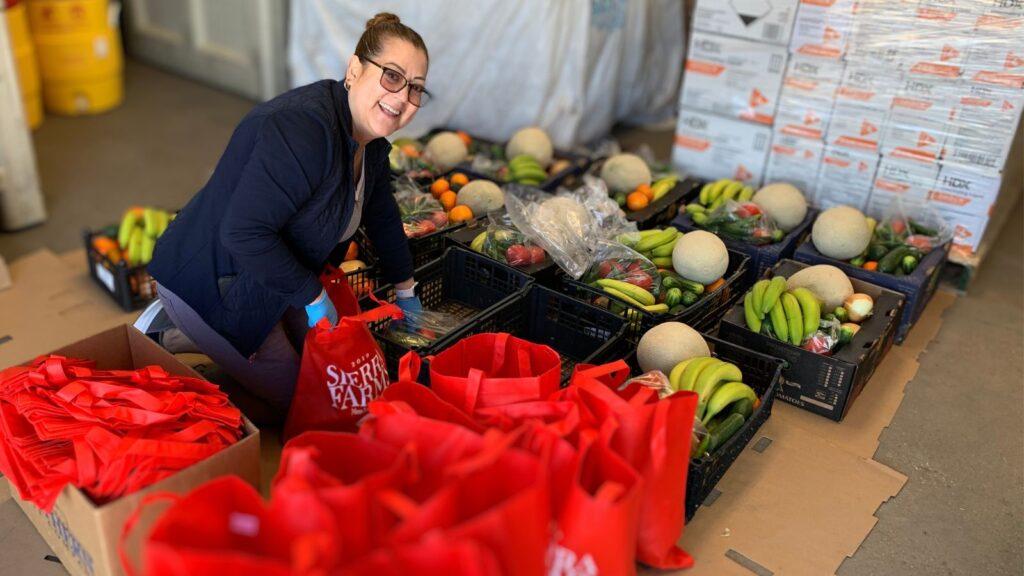
The drive-thru food bank operates once a month. At the end of their workday, workers line up in their vehicles to receive food assistance directly to their trunks. The items are provided by Monterey County and include staples such as rice, beans, peanut butter, pasta, salsa, milk, juice and bread. In addition, bags of salad or boxes containing tomatoes, lettuce, celery, and other fruits and vegetables, which the food bank receives as donations from local farmers and stores, are distributed.

The Interview

Alexandra Martinez, Senior Marketing and Sales Associate, met with Montañez to discuss both events in greater depth. Below are the highlights of the interview—which has been translated from Spanish:

Portrait of a smiling farmworker advocate professional dedicated to creating better workplace opportunities and community support for agricultural wor


How did the idea for the Stuff the Bus and Drive-Thru Food Bank events develop?

Both events were created as a small token of appreciation for the workers—to give them something more than just a paycheck every week and to show them that we truly care about helping them.

Before I became the operations manager, Jackie Vásquez used to hold that position, and both ideas came from her. Now that I’m in charge, my colleagues and I have continued to keep both projects running successfully.

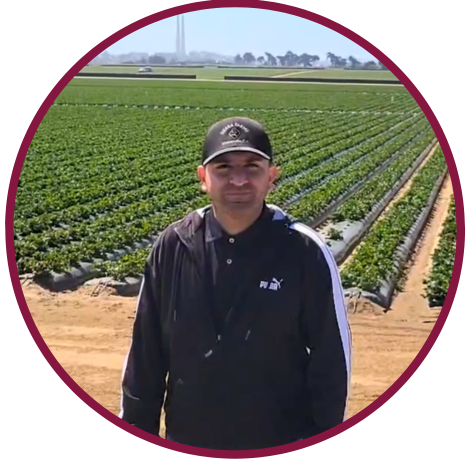
Portrait of a worker in a strawberry field wearing a cap, representing agricultural labor and farm worker opportunities.
Portrait of a smiling farmworker advocate professional dedicated to creating better workplace opportunities and community support for agricultural wor

What inspired you to incorporate this type of event into your operations?

The cost of living in California is getting higher and higher, and for parents with two, three or four children, it’s very expensive to buy backpacks and school supplies for all of them. That’s why we decided to do something to try to help our employees. We also want our employees to see the benefits of working with us and to stay here. It’s another way to retain employees.

Portrait of a worker in a strawberry field wearing a cap, representing agricultural labor and farm worker opportunities.
Portrait of a smiling farmworker advocate professional dedicated to creating better workplace opportunities and community support for agricultural wor

Tell us a little about the logistics behind the events.

In order to distribute the backpacks, we must send a list to the counties (Santa Cruz and Monterey) by mid-July at the latest, with information about the students who will receive them. To do this, we give a form to all employees with children in grades K–12 so they can fill it out, return it to us, and have their children added to the list.

For the food bank, we notify them one month in advance of how many people need food/grocery packages, and before the distribution day, we compile a list here in the office of everyone who wants a grocery package. Then we submit it to the food bank’s office to verify that we did indeed distribute the food.

Portrait of a worker in a strawberry field wearing a cap, representing agricultural labor and farm worker opportunities.
Portrait of a smiling farmworker advocate professional dedicated to creating better workplace opportunities and community support for agricultural wor

What is the most challenging part of organizing these events?

Ten years ago, when we started these two events, the biggest challenge was finding volunteers to make both Stuff the Bus and Drive-Thru Food Bank happen. Now we have a great team here at the office, and there are plenty of people who want to help.

Portrait of a worker in a strawberry field wearing a cap, representing agricultural labor and farm worker opportunities.
Portrait of a smiling farmworker advocate professional dedicated to creating better workplace opportunities and community support for agricultural wor

How many families and children typically participate each year in Sierra Farms’ back-to-school events?

I don’t have the numbers for the families, but I do know that the number of students who are children of workers has been between 120 and 185. Last year, 185 students received backpacks. As for the food bank, we usually order food for 400 families.

Portrait of a worker in a strawberry field wearing a cap, representing agricultural labor and farm worker opportunities.
Portrait of a smiling farmworker advocate professional dedicated to creating better workplace opportunities and community support for agricultural wor

Why is it important for Sierra Farms to organize these events and invest in the well-being of its workers’ families?

It’s important for us to hold these events because we truly care about our workers, and we know that without them, Sierra Farms and GoodFarms wouldn’t exist. Plus, we build a stronger sense of camaraderie among those of us in the office, and we show the people who work all day in the fields that we truly value them. These events are ways for us to serve them, and I feel that they really notice and appreciate it.

Portrait of a worker in a strawberry field wearing a cap, representing agricultural labor and farm worker opportunities.
Portrait of a smiling farmworker advocate professional dedicated to creating better workplace opportunities and community support for agricultural wor

What advice would you give to other agricultural companies that want to organize their own appreciation event to support their workers?

If you want to improve employee retention and build stronger relationships with your employees, it’s important to consider what else you can do for them, because paying them a check every week often isn’t enough.

Today’s workers are gradually shifting their mindset. They want to work not only where they’re paid well, but also where they’re treated well, where they’re respected, and where they’re offered something more than what every other company offers. They’re very valuable, and they know it—so what else are you going to offer them to convince them to stay with you and not go work for someone else?

Portrait of a worker in a strawberry field wearing a cap, representing agricultural labor and farm worker opportunities.