

Multistakeholder Collaboration Creates New Value Across the Supply Chain
The following article is taken from EFI’s 2024 Annual Report, Celebrating a Decade of Responsible Labor Practices and Worker Engagement. Read parts two and three of the series.
EFI was born out of the growing recognition that something significant had to shift in stakeholder relationships to preserve and grow the fresh produce industry. For decades, farmworker organizations had clashed with agricultural employers to address low wages and challenging working conditions. Yet fewer than 1% of U.S. agricultural workers experience the legal protection of a union contract.
 “Those of us in the farmworker union movement realized that we needed to expand the tools in our toolkit beyond unionization if we were truly going to be able to improve working conditions,” explains Erik Nicholson, former Senior Vice President of United Farm Workers and EFI’s first board chair.
Meanwhile, fresh produce suppliers were confronted with a labor shortage and a declining share of the food dollar. “When we saw that only about 9 cents of the consumer dollar was returning to the farm, we realized that we needed to adopt a model that leveraged money and interest further down the supply chain,” Nicholson adds. Conversations proceeded, and the farmworker unions engaged certification expert Michael Conroy, who encouraged the group to revisit their value proposition and consider the role that farmworkers play in food safety.
At first, the unions dismissed the idea, believing that food safety was squarely the responsibility of management. They quickly came to realize, however, that when farmworkers have the proper knowledge and understanding of risk management protocols they can create more value for the farm, well beyond their physical labor. Engaging workers could not only improve food safety measures but also help drive improved working conditions, operational efficiency and product quality.
“We recognized that we could shift the paradigm and conversation about the role that farmworkers play in the field,” Nicholson shares. That realization would become one of EFI’s main tenets and has defined its long-term influence on the agricultural industry. He continues, “EFI was the first to posit the value that workers create throughout the whole supply chain.”
At the same time, retailers were facing increased pressure from consumers and shareholders to prove that their supply chains were ethical and sustainable. Two retail buyers, Costco Wholesale and Bon Appétit Management Company, showed interest early on in supporting a new model that would create value across the supply chain and provide more assurance around working conditions and food safety. Both companies, soon joined by Whole Foods Market, helped shape the EFI certification standards and agreed to pay a premium on EFI-certified produce, the majority of which would be returned to workers for their additional work and diligence.
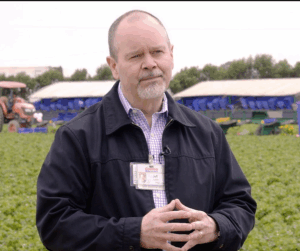 During an interview in 2019, Jeff Lyons, Senior Vice President of Fresh Foods at Costco who has since retired, explains the company’s participation in and support of EFI: “Our mission statement and our code of ethics all deal with taking care of our employees, taking care of our members, but also respecting our suppliers, and that goes all the way down to the people that work in the field. We found that there was a void in the industry that was just not consistent with the culture that we have at Costco, and we got to work on it.”
With retailer power behind them, the farmworker union groups approached groups like the Center for Science in the Public Interest, Consumer Federation of America and Pesticide Action Network to join the work and dialogue. Together, this multistakeholder group of “strange bedfellows” aimed to ensure that all parts of the fresh produce supply chain benefited from the fair treatment of workers, providing safer produce to consumers and protecting the environment and long-term viability of the land. The group had to think differently, consider the whole system, and adjust attitudes toward the other players in the supply chain.
The collaborative work ultimately led to development of the EFI Standards and the EFI Leadership Team training model.