

Spring 2025 Online Seminars
EFI’s online 1-hour seminars are designed to enhance produce professionals’ knowledge and skills through an accessible, interactive learning environment. Each seminar aligns with the Ethical Charter on Responsible Labor Practices, covering key areas such as legal compliance, ethical recruitment and effective grievance mechanisms. Seminars cost $85, with bulk discounts available—contact us to discuss registration discounts.
FLASH SALE! Use code FLASH50 between February 20-28, 2025 to receive 50% off your seminar registration.
Fresh produce operations often face roadblocks in hiring full time, temporary and seasonal workers to keep their operation running year-round. In this seminar, we will share compliance points and training tactics to attract and retain skilled labor within the agricultural sector.
Topics:
- Hiring practices: standards requirements vs “on the ground” reality, how to ensure compliance
- Verifying worker identification: challenges verifying worker identification and age, tips for navigating these challenges.
- Open dialogue: sharing experiences and learnings (the group to share their own experiences and learnings
Fresh produce operations often face roadblocks in hiring full-time, temporary and seasonal workers to keep their operations running year-round. In this seminar, we will share compliance points and training tactics to attract and retain skilled labor within the agricultural sector.
Topics:
Hiring practices: standards requirements vs “on the ground” reality, how to ensure compliance
Verifying worker identification: challenges verifying worker identification and age, tips for navigating these challenges.
Open dialogue: sharing experiences and learnings (the group to share their own experiences and learnings
Developing effective communication skills to create a culture that prioritizes well-being, fostering a safe and collaborative workplace.
Learning objectives:
Understand the connection between effective communication and worker protections.
Identify key elements of communication that prioritize employee well-being.
Explore practical communication strategies for fostering collaboration in the workplace.
Recognize the role of communication in advocating for and ensuring worker protections.
Acquire actionable insights to implement communication practices that cultivate a safe and collaborative work environment.
Topics:
Effective communication and worker protections.
Communication elements
Hands-on strategies for collaboration
Practical and actionable insights to implement communication practices
Explore how engaging your workforce by building a culture of involvement and collaboration, can strengthen your management systems.
Learning objectives:
Understand the importance of collaborative management systems in driving continuous improvement.
Explore techniques for fostering a culture of involvement and collaboration within your team.
Learn practical strategies for implementing collaborative management systems in the agricultural industry.
Identify ways to overcome common challenges and barriers to collaboration.
Discuss possible next steps to initiate or enhance collaborative management systems in your organization.
Topics:
Importance and Benefits of Collaborative Management Systems
Strategies for Fostering Collaboration and Inclusive Environments
Tools and Techniques for Implementing Collaborative Management Systems
Overcoming Resistance to Change and Role of Managers/Supervisors
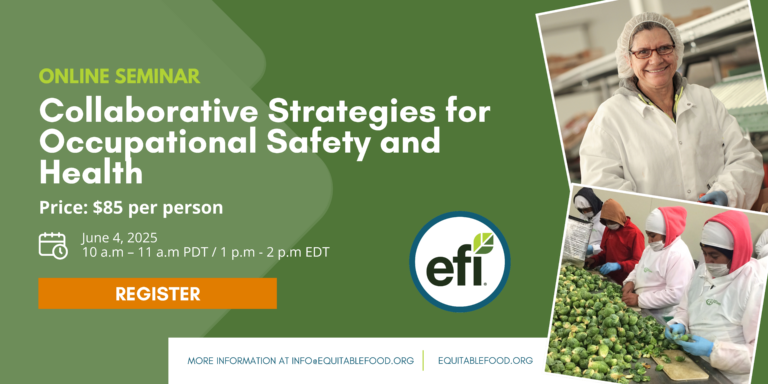
In this seminar, we will discuss safety and health standards that focus on preventing common work-related injuries and illnesses.
Objectives:
Review basic standards and common risks to health and safety in agriculture.
Identify Safety and Health risks at work and who can help or give more information.
Incorporate data collection with the workforce.
Review the next steps to solve a problem with adequate information.
Participants should learn:
Identify the common safety and health problems at their workplace;
Steps to analyze the causes of safety and health problems;
Best practices to implementing a safer, healthier workplaces; and
How to involve their co-workers in accomplishing all of the above.